Showing posts with label density. Show all posts

Tuesday, September 22, 2015

Design for Wellbeing in the Built Environment

My first post to this blog, almost one year ago now, focused on designing future environments for the wellbeing of its people. Today I will take it back to the topic with Professor Libby Burton's Legacy Lecture: The Pursuit of Happiness. I share many, if not all of Professor Burton's words in her video (below) - she is interested in creating environments that make people happy and help people flourish. I would like to review the key information from her 30-minute talk. 

People are starting to ask the question "How do the environments around us make us feel?" I believe that is one of the most important questions today, and I would like to help answer it. It's a new topic of interest that has emerged in recent years for a few reasons. Firstly, research concludes that health and health issues are lifestyle related. The classic example is of people being thinner and more heart healthy in cities or higher density areas. Also, physical health and mental health are equally important yet so intertwined. And finally, developing sustainably will only be successful if we first consider peoples needs and desires. The built environment plays the biggest role in these three facets. 

Well being is directly affected by the built environment in these ways:
  • Mood - the immediate world around us has considerable influence on our ever-changing outward and expressive moods
  • Feeling - how does this place make us feel on the inside
  • Stress levels and stress tolerance - a relaxing environment will help balance out high energy or stress levels
  • Functionality - does the environment serve its purpose and allow you to efficiently accomplish the task at hand?
  • Concentration - too many distractions can lead to a loss of focus
  • Coping with mental disorders - Libby uses the example of repetitive street patterns negatively impacting people with dementia 
  • Experience of pain
  • Physical discomfort (body temperature) and safety from injury 
  • Satisfaction with life - Libby uses the example of status of housing
The built environment affects us indirectly as well:
  • Physical activity
  • Social engagement and interaction, community spirit
  • Biophilia - human connection to nature and other living systems
  • Accessibility
  • Attachment and belonging - sense of place, uniqueness
  • Safety and security
  • Competence and accomplishment
  • Autonomy and independence
  • Equality
So far, this is what we know: 
  • Density encourages walking, social interaction and community engagement
  • Mixed-use, medium-rise, local facilities and amenities in an irregular grid pattern are the most functional
  • Greenery: as much as possible without sacrificing density
  • Transition zones: there should be soft edges between public and private space to encourage social interaction 
  • Housing layouts should offer a balance of communal and private space
  • "Eyes on the street:" plenty of windows towards the street to foster feelings of safety
  • Maximize day lighting
  • Clear differentiation between public and private space
  • Attractiveness of the environment
The smells and sounds of our immediate environments in cities help us gather and process information, but we are visually wired animals; almost 50 percent of our brain is involved in visual processing, 70 percent of all our sensory receptors are in our eyes, and we can get the sense of a visual scene in less than 1/10 of a second. That information forms short-term emotions that turn into lasting feelings with positive and negative impacts on our overall wellbeing. It's crucial that we carefully design our built environments for prolonged success. 


Click to see Libby Burton's Legacy Lecture

Wednesday, August 26, 2015

Twin City Rapid Transit

Yesterday I returned to SF from a short stay at "home" in St. Paul, Minnesota. Being with my family and friends certainly makes me feel the love for where I was born and raised, but I can't help compare the two places. I love it here, and while it's not the place where my "people" happen to be, it is the place where I don't spend 25% or more of my time in a car getting around from place to place, person to person. 

In celebration of the Twin Cities, I'm sharing this map from 1913 showing the "Rapid Transit" streetcars of Minneapolis and St. Paul. 


Timeline
1872: The first streetcars were pulled by horses, starting off in St. Paul
1875: The city of Minneapolis joins in
1887: Upgrades to the system allowed the cars to be pulled by cable loops
1892: Cars hit the electric grid
1920: Peak ridership occurred, carrying an estimated 238 million people
1929 - 1930's: The Great Depression saw ridership leveling off
1939 - 1945: There was a climb in passengers as World War II brought gas rationing
1954: The Twin Cities had its last streetcar journey in Minneapolis

The system stretched from Stillwater to Lake Minnetonka, with a total of 523 miles of streetcar!
The pink pin is Excelsior, on Lake Minnetonka. Stillwater in the northeast corner, located on the St. Croix River which separates Minnesota and Wisconsin here.

Is it ironic that streetcars in cities today are tourist attractions; we get entertainment out of these transportation units that are a thing of the past, yet technically speaking, very efficient? And had all the routes lasted longer, without the interfering competition from automobiles, they could have been a huge factor in the continued creation of what I imagine to be extraordinary urban and inter-urban transportation, spaces, and places. 

For example, San Francisco is famous for having streetcars that tourists will wait hours to ride. San Franciscans don't ride them unless you hop on to hop off, or, you find yourself in these situations: 


"These situations," being visits from family, are the best, by the way!

Even in Minnesota, we have a museum dedicated to our historic streetcar. Though they are a thing of the past in terms of getting people from point A to point B on a daily basis, I believe they will make a comeback by influencing future transportation services of the future!


Today in SF you find a convergence of the historical streetcar and a modern US city's bus system: buses that are (typically) connected to above electricity. The buses run absolutely everywhere, and are pretty reliable. Technology has helped with that :)


I didn't want to find something off the web, so I looked out my window and took one for myself! Notice the electric wires across the image; buses connect to these. Although an extensive bus system requires lots of energy, transportation connected to electricity reduces pollution, which is a concern in terms of air quality in denser cities.

Sources & Links:
MN Historical Society YouTube video 
Top 10 Trolly Rides
Minnesota History Center 
Minnesota Streetcar Museum

Tuesday, June 30, 2015

Is Perpetual Densification to Eliminate the Suburbs the Answer?

A Planetizen article published in 2011 uses the case study of Athens to explore a "city without suburbs."

Athens, Greece started eradicating its suburbs in the 1970s and continued this densification goal through the 80s. There were four main reasons for this push: 1) confined land space, 2) a capitalistic political system, 3) developer lobbying, and 4) increasing population pressure. In 1981 the municipality peaked at a population of 885,000 with a density of approximately 60,000 people per square mile. Although its population has been on the decline since the 2000s, it remains one of the most dense urban areas in the developed world. 


As the city's compactness and so-called walkability in the suburbs grew, car ownership did not decrease, and positive impacts for modes of walking, cycling, and transit were not reported. Between 1990 and 2000, public transit actually fell while private transport increased. To paraphrase the conclusion from the Planetizen article: "Athens exemplifies every single urbanist approach, yet fails to deliver anticipated results. Elements in the Athenian version of natural urbanism have produced unwelcome outcomes; the pinnacle of urbanisn that achieved the eradication of suburbs came at substantial quality of life and environmental costs. 
"Dysfunctional cases in any discipline trigger insights by demanding explanation.
Athens is a case of dysfunctional urbanism and offers a true laboratory for testing assumptions, principles, and theories toward a more robust model of an urbane city."

I will take it upon myself to address the last part of this article. The first and most important question is: was there a plan from the beginning? What was it? Was it simply to answer the demand for population increase, or were there additional, more comprehensive goals? At least from this article's information, the 4 reasons mentioned above seem to answer that question. The article points out that Athens ranks lowest on a quality of life ranking for Western European cities; it's filled with noise, traffic, and pollution. Traffic fatalities also rank among the highest comparatively. These are indications that the city may not have incorporated plans to manage the consequences of an increasing population. 

My conclusion: Athens is not the case of dysfunctional urbanism, it's the case of dysfunctional planning, or lack thereof. The city's goal was to eradicate the suburbs and increase density - this was achieved. So it did succeed, if only in this way. It seems to me that quality of life was pushed under the rug in the attempt to attract and fit more people. Yet a place can immediately loose its appeal as social and environmental issues are sacrificed. Shelter alone won't cut it; people need connection and community as well. Athens may exemplify a few elements of urbanism very well, so while those can be used as a lesson, the case study as a whole can be used to see interconnectivity at work. And because of this dense web of connections, we will never get a complete story of the past, nor will we be able to predict the future. But we sure can plan with intention, holistic goals, and measurable targets towards better living situations and healthier lives for people in our cities and on this planet.

Food for thought: "If you build it, they will come" ...

Sources
Planetizen 
newgeography 

Wednesday, June 17, 2015

Healthly and Equitable Density

A recent post on CEOs for Cities from Stantec senior principle David Dixon entitled "To Make Your Community Healthier, Make It Denser" contains a number of meaty statistics about the connections between health, cars, equality, and cities... fueling the reality that density saves lives:
  •  1999: The Centers for Disease Control reported that inactivity and poor diet caused 300,000 deaths in the United States, second only to tobacco (CDC)
  •  2008: University of Utah researchers found that men who lived in walkable neighborhoods weighed 10 pounds less than men in low-density neighborhoods (NRDC)
  •  2014: Cities with more compact street networks have lower levels of obesity, diabetes, high blood pressure, and heart disease (Journal of Transport & Health)
  • Per-capita auto fatalities rise roughly 400 percent along a continuum of density from typical urban to typical suburban (Accident Analysis & Prevention)
  • The United States has three to five times the amount of traffic fatalities relative to other developed countries; auto fatalities represent the #1 cause of accidental deaths in the U.S. (Source)
  •  Ten percent of U.S. households control 75 percent of all U.S. wealth - the wealthy are consuming the walkable neighborhoods at a voracious rate. 
  • For the first time in this country's history, more poor people live in suburbs than in cities (Source


"The payback from density extends beyond physical health. Walkable neighborhoods promote economic health by attracting knowledge workers and investment and promote environmental health by creating an inviting alternative to sprawl... [Yet] as we employ density to create healthy neighborhoods, we also need to employ it to create equity."
 

Monday, May 18, 2015

Street Design Shapes Lifestyle


Picture this:

You live in the neighborhood on the left where the streets were designed with the passive approach. You have errands to run so you get in your car, driving from store to store, even though each store is located just a few hundred feet from each other. You get into your car, likely just to drive across the street and park in another massive and identical looking parking lot. Get out of your car, get back into your car, spend 5-10 minutes to travel .02 miles. Your errands take 2 or 3 hours out of your Saturday.

Or picture this:

You live in a "proactively-designed-streets" neighborhood, and you spend 5-20 minutes a day, stopping for your errands down the block as you walk home from work/school/etc.

What lifestyle sounds more appealing? Which is better for health, happiness, and what is easier on our natural resources?

________

Image adapted from the National Association of Transportation Officials Urban Street Design Guide

Saturday, May 2, 2015

The "End of the Car Age" and how technology makes it happen

A great article from the Guardian (thanks Scott Moen aka Dad!) about how many cities are transitioning away from cars. The article digs into a couple different facets, but I decided to highlight the link between the "end of the car age" and the "digital age," as it relates directly to me.

Digital technology will have a major role in creating collaborative platforms for urban mobility:
"Digital information is the fuel of mobility,” says Gilles Vesco, the politician responsible for the city of Lyon, France's sustainable transport. “Some transport sociologists say that information about mobility is 50% of mobility. The car will become an accessory to the smartphone."
"The more that we have people sharing transportation modes, public space, information and new services, the more attractive the city will be."
In order for cities to compete they will need to be increasingly interconnected and multi-modal: a variety of public transit and healthy lifestyle options that include bike-friendly roadways, cycle superhighways, bike-shares, car-shares, bus service, subways, trams, and increased walkability. This also means cities will need to focus on providing reliable technological infrastructure. Being well connected on a physical and city-wide scale is equally important today as being connected on a digital scale. All which will lessen car-dependence and make owning a private automobile inconvenient relative to the variety of options that are readily available at our fingertips and often times free (transit apps for smartphones) or less expensive.
"Generation Y, or millennials, now in their 20s and early 30s who have come of age in the digital era, seem less wedded to possessions than their baby boomer predecessors. Smartphones are prized objects and the future of transport is likely to be based not on individually owned cars but on “mobility as a service.” Consumers will, so the theory goes, use their smartphones to check ultra-detailed travel news, locate car-club cars or bikes, check for parking spaces, call up Uber drivers, and arrange shared rides. Who needs a personally owned car?"
This may be part of a "theory" of reality in general right now and as far as this article goes, but, on a daily basis I either walk, take a bus, request an Uber, check my real-time travel app, or locate and arrange a car club or share. I am living proof that this is happening right now.

Friday, May 1, 2015

Early Observations of San Francisco


It's hard to believe I visited San Francisco this past January 2015 before taking the real plunge in moving to the city the following month. I had been here once before in September 2011 for a tournament with my college soccer team (doesn't count, right?). Little did I know I would be back to stay, and so quick to fall in love with this place for so many reasons. The above picture was taken in January because I was so exited to finally be here and to start making observations on the minute details of the city that I have such an eye for. Unfortunately, I haven't had many pictures to follow this (hence my falling behind on intended posts). And there was also the whole "finding a place to live in the most expensive and housing-competitive city in the country" that was a distracting priority. It's almost as if I've stopped noticing many of the details that make this city amazing, and maybe that was okay too, because that's exactly what makes life in here that great. Natives or people who are accustomed to this lifestyle may not understand what makes this place tick. People who just experience living here shorter term question why they would ever leave and ask what was so wrong (different) about back home.
On a different note, that may be the best part: the chance to be and become a part of the routine, because I notice these things. I won't ever fail to recognize that I am living in what is quite possibly the closest to my dream world, every single day. These realizations have created the opportunity for me to be more conscious and mindful of what I do and see on a daily basis, with the goal of sharing my experiences here on this blog.

Some of my first observations of this city:
  • The "Green Wave" that has traffic signals set for 13 mph - the average speed of a bike. Convenience for bikes is favored over cars.  
  • The density. San Francisco is 7 miles by 7 miles. It's a growing city. Everything must be built close, in between, or on top of something else.
  • That makes it really easy to walk, bike, transit, etc. places (the most you would ever need to travel to get from one end of the city to the other is... 7 miles!)
  • Suburban sprawl doesn't and physically cannot exist. Therefore big box stores and parking lots do not exist (my biggest eyesores!)
  • Public transportation is almost too easy. So much variety! The electric buses are cool and it shows that the city cares about air pollution.
  • It's annoying and expensive to own a car here. Parking? Traffic? No thanks. 
  • Then again people love their benz and beamers...money. But there are also many homeless people - the whole range is present.
  • I expected more bicyclists. In my opinion, not enough people bike and/or the city could be doing more for bike commuters. Catering for hobby cyclists and tourists?
  • The neighborhoods (!!) filled with contrasting vibes and people that allow the blending of diverse communities together.
  • Oh yeah, and the weather is phenomenal.

For those of you who still check back and follow, thanks for sticking with me! Much much more to come,

Kristin

Monday, January 12, 2015

Density in a Munich Suburb

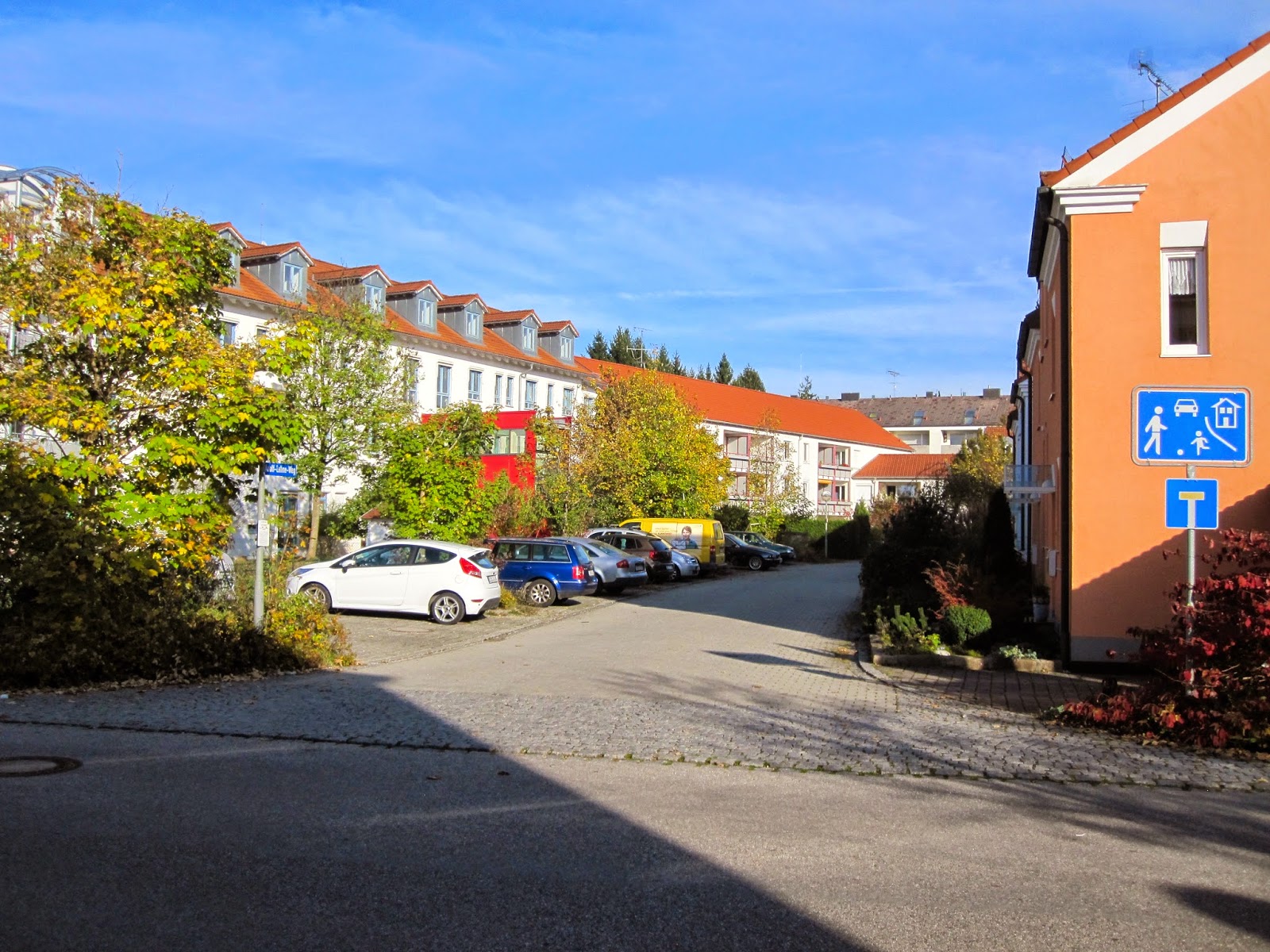
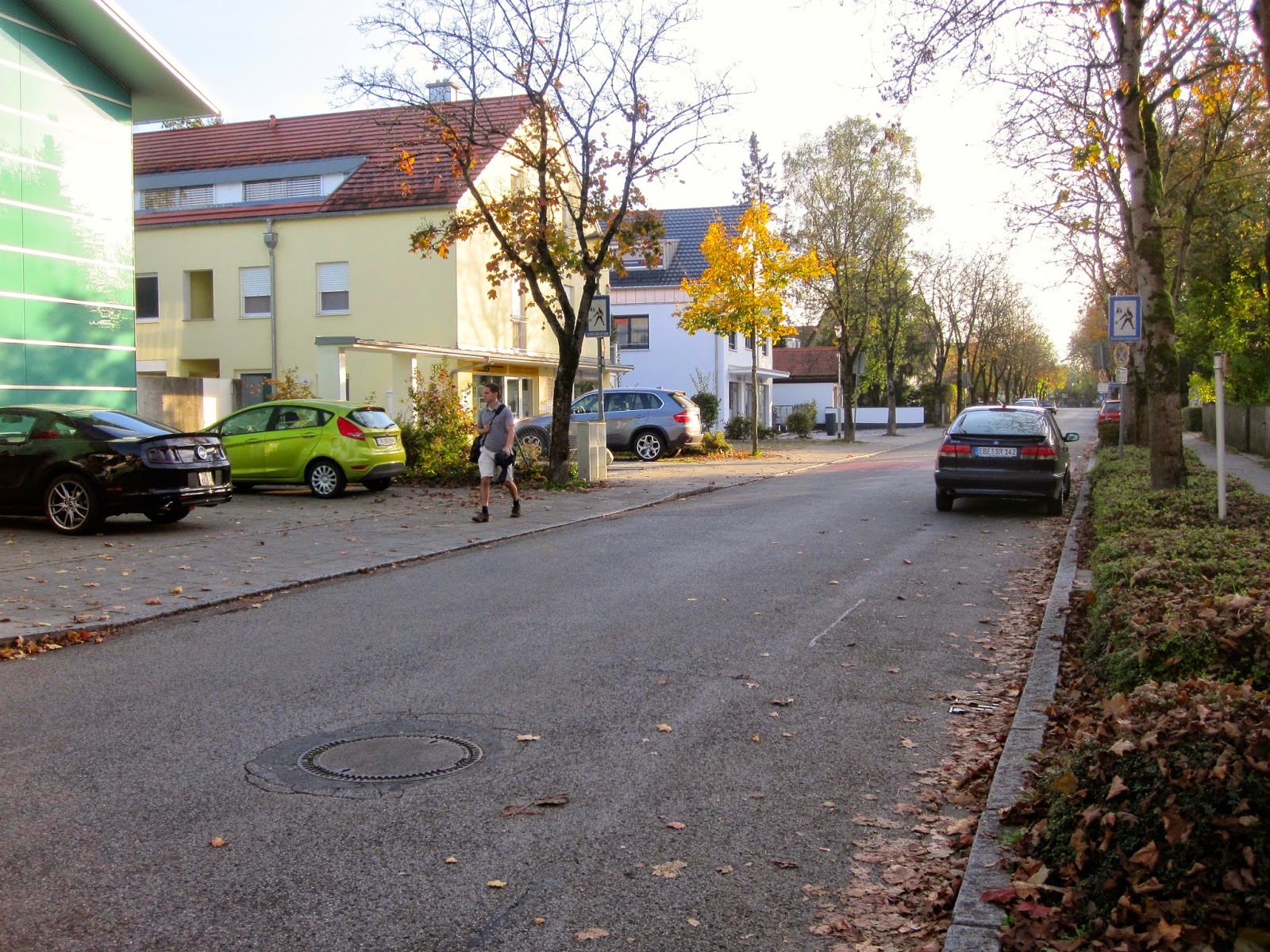
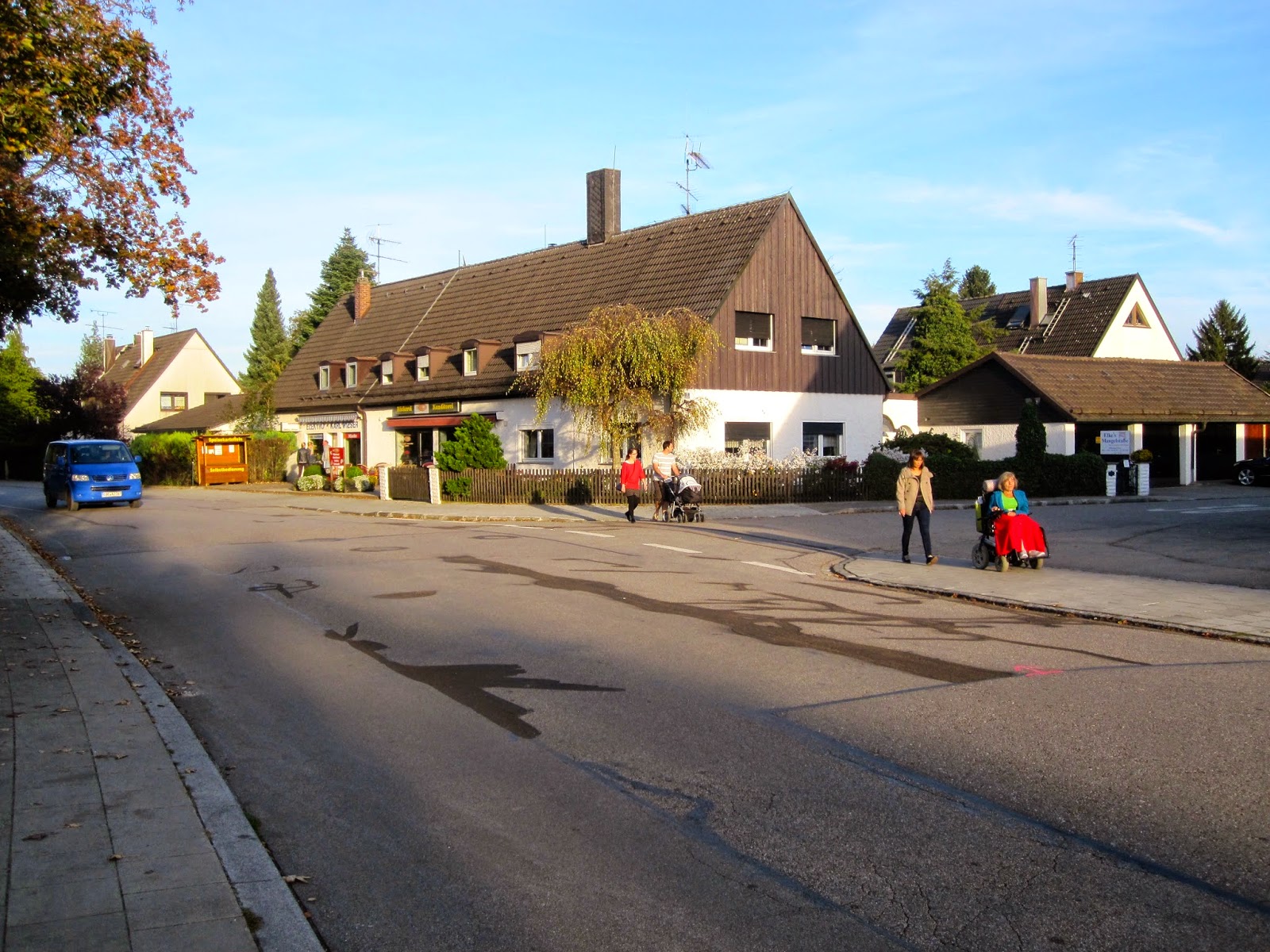
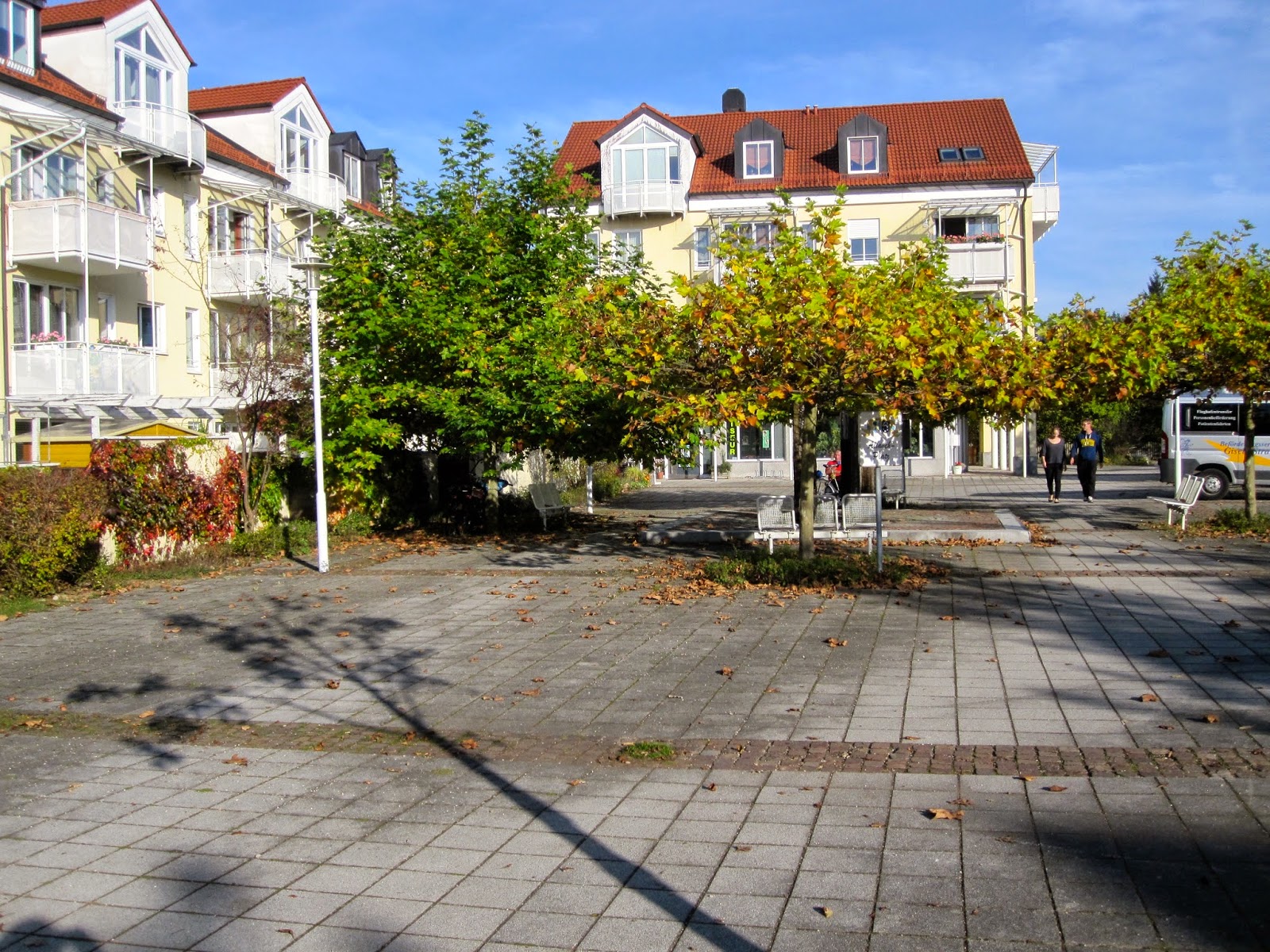
This post continues a conversation started Tuesday, December 9, 2014 - Suburbs: Twin Cities vs Munich. The previous post gives an areal view. Here I will take you to the ground level of the suburb of Munich - Vaterstetten and Baldham - to showcase how dense, walkable, and transit friendly these neighborhoods are.


Housing
New housing next to the Baldham S-Bahn
New housing going up right next to the S-Bahn (train into downtown Munich) station in Baldham
You can find these blue signs (all the way to the right of the picture) everywhere - I will talk about them in another post
Attached houses
In the newer parts it's very common to see multiple attached units
Notice the garages underneath
You can always find traditional Bavarian style homes
Attached housing right on the edge of the limits
This is a pedestrian-way - no cars allowed
Attached housing allows for privacy, energy efficiency and density

A range of housing can be found here
Bavarian-style architecture is still incorporated in the buildings and housing
So many attached houses!
This is the largest backyard I've seen here - no joke
View from my bedroom window
Car Park

Little containers for smaller-sized cars
Underground parking at a main shopping center next to the S-Bahn
Underground parking for housing
Germans often drive nice cars - and they still like to park them in garages
But the concept of garage is very different
Many use the street as permanent parking spaces
Rows of garages - kind of ugly? But it meets a need in a high density manner
100+ car Walmart-style parking lots in the suburbs? Forget about it -- this is all you get
Parking places intermixed with the boulevards
An on-street parking in addition to that - slows cars down
A chance for greenery
Streets

Roundabout - keeps traffic moving
So green!
Split road with a chance for greenery in the middle
Skinny streets slow cars down
Not quite enough room for 2 side-by-side cars, so cars can drive onto the barrier or up onto the sidewalk to pass
Mirrors help cars see what's coming
Mirror down a perpendicular street
Leaving Baldham - entering Vaterstetten
There is ALWAYS a sidewalk
Be conscious of bikes
Be conscious of pedestrians
A main drag - bikes and peds are always seen here too
Even a main drag has one skinny lane
The sign reads: Speed down, please! Children
Main street perpendicular to the S-Bahn station - lots of shopping and housing here, and always lots of people
Grocery store, bakery, pharmacy, bank, etc., and plenty of housing
Roads are NEVER packed with cars
Just as many people - or more - as autos
Wide roads made skinnier with obstructions
Tiny little streets!
Wide streets made more interesting
You don't drive fast down such a street
Public Spaces

Courtyard with housing, next to shopping and the Baldham S-Bahn station
Green space and playground ares for kids, next to dense housing
3/4-story housing
Large park and green space located next to housing
Courtyard area with shops on the ground level and housing above
Soccer fields, of course
A playground is always walking distance
Small play places are EVERYWHERE
Car park, bike shelter, shops and restaurants, 100 ft from the S-Bahn station
More places for children to mingle
Intermixed in housing
Shops/businesses on ground level, space to mingle


Ways to Get Around, Through, and to Town

Sidewalk along the roundabout
Walking only -- grocer, restaurant, pharmacy, bookstore, clothing, etc -- small, local businesses
Bike park!!!
Bike and ped path, separated, under the S-Bahn, parallel to the street
View from the opposite side
Many pathways like this -- bike and ped only

Adding greenery to an intersection
Bike or drive
Bus stops on tiny suburb streets
This bus stop has flavor!

The "beginning" of a ped and bike-only pathway

Continued
Continued
Continued
Interrupted by small streets and slow-moving/rare traffic, but it keeps going!

Continued
Continued
The start from the opposite end
Amazingly -- this traffic signal exists to stop for pedestrians, only 
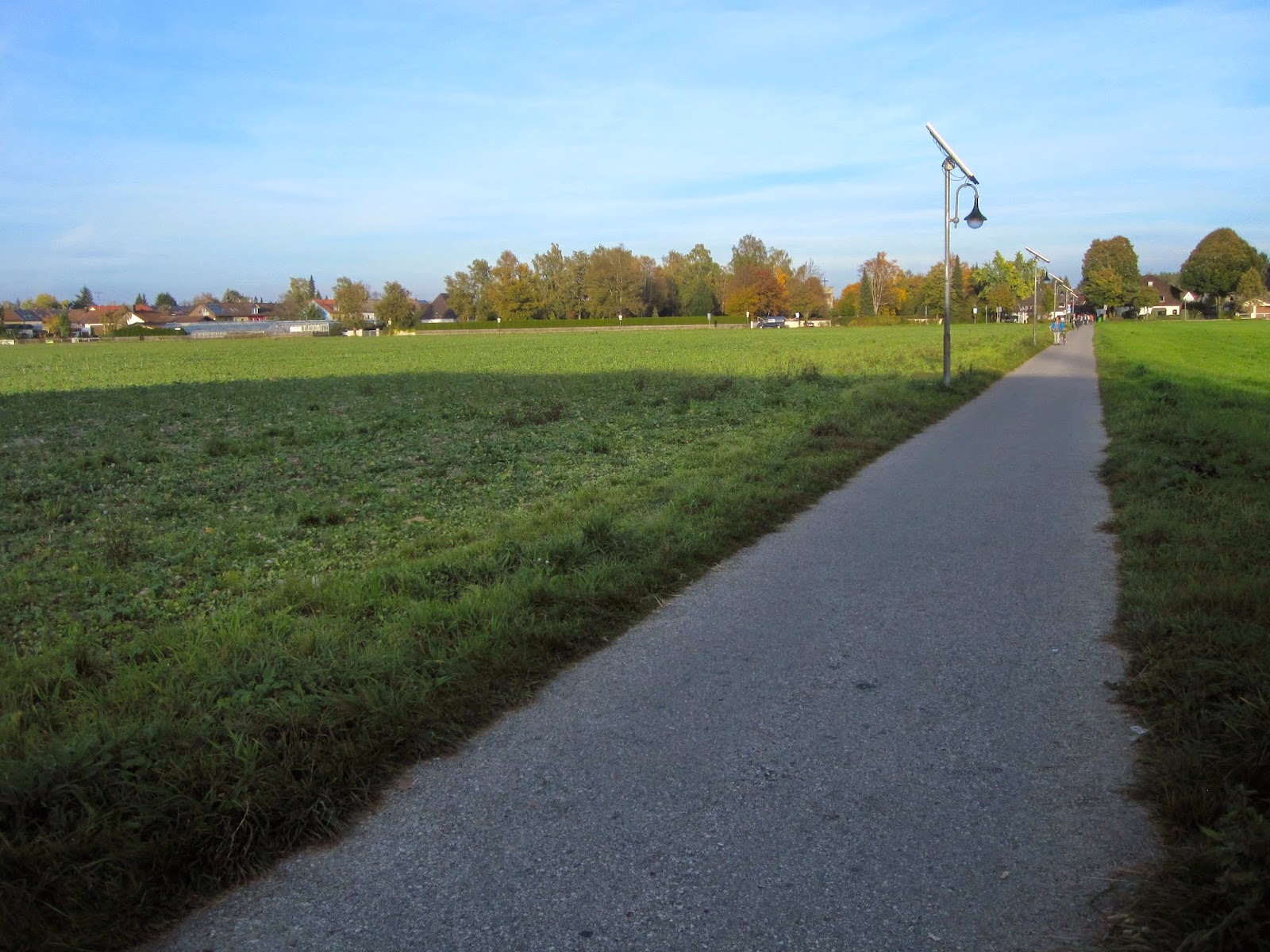
Bike/ped path splits a field
If it's there, they will come
Another part of town, another ped/bike-only pathway
Bikes and buses seen in these Bavarian suburbs all the time

Bike park!!
Mixed Use

Hotel, grocer, pharmacy, housing, etc., right next to the S-Bahn station
Ground level restaurants and shops, housing above
Ground level shopping, housing above
Ground level business, housing above
Shops and amenities along the main drag off the S-Bahn in Vaterstetten
Post office, ice cream, bakery, coffee,... housing above
Ground business/shops, housing above AND bike park!