Monday, December 1, 2014

Understanding Human Needs and Well Being

In order to dive deeper into one of my greatest interests (urban design for well being), it's necessary to understand what contributes to individuals' well being. The meeting of basic human needs are the foundation for a healthy and happy life, but also the foundation for a lifestyle characterized by high living standards on a societal level.
I start by looking at two popular definitions of fundamental human needs. Ultimately it boils down to physiological (physical) and psychological (mental) needs.

1. Manfred Max-Neef's fundamental human needs:
Subsistence
Protection
Affection
Understanding
Participation
Leisure
Creation
Identity
Freedom


2. Maslow's Hierarchy of needs:
http://upload.wikimedia.org/wikipedia/commons/thumb/6/60/Maslow%27s_Hierarchy_of_Needs.svg/2000px-Maslow%27s_Hierarchy_of_Needs.svg.png

In addition to these, and to take things a step further, I will share my own ideas about basic well being. Within the past year, these ideas have come up at least twice; first in working with and learning about Native American culture and second in reading Stephen Covey's "The Seven Habits of Highly Effective People." Each time it comes up I not only gain new insights but it reinforces its importance to and relevance in my interests. 

Paraphrasing Covey:

"Human nature is four dimensional -- body, mind, heart, and spirit.
Body - healthy, preventative 
Mind - continuous education, broad and deep
Heart - serving others brings great fulfillment and joy; deep, respectful listening
Spirit - recognize that the source of our basic need for meaning and of the positive things we seek in life is principles or external natural laws

Native American Medicine Wheel

An individual's balance of the mental, spiritual, emotional, physical aspects creates beauty and harmony.


Covey Principles: fairness, integrity, honesty, human dignity, service, quality/excellence, potential/growth, patience, nurturance, encouragement)
Anishinaabe/Indigenous Principles: love, respect, truth/honesty, generosity, bravery/courage, wisdom, humility

A quote from Max-Neef acknowledges a necessary balance: "Human needs must be understood as a system; that is, all human needs are interrelated and interactive. With the sole exception of the need of subsistence, that is, to remain alive, no hierarchies exist within the system. On the contrary, simultaneities, complementarities and trade-offs are characteristics of the process of needs satisfaction."
 
How does well being relate to urban planning? I'd like to make several points. 

First, as more people move into urban areas, cities need to be places where peoples' basic needs are met, both physically and (arguably a more difficult challenge, especially in developed nations) mentally. I would argue that effective urbanization is one of the majors conflicts of our time. How we urbanize - whether we plan sustainably for the future or not - dictates how we use energy and resources, and in turn, implications for a changing global climate. In the 12,000 year history of "human civilization" (characterized by the onset of the Agriculture Revolution), 2006 marked the first year that the majority of the worlds population make their home in an urban area. As people migrate from rural to urban, the scales at which life has always existed are transformed. Simple turns complex. In this transformation, and most importantly, basic human needs must be met in order to create and build upon a functioning society. In some ways, the natural laws and principles that have guided us for thousands of years are lost in translation. For the first time in history, millions of people are congregating in a geographic location and competing for the limited resources that meet basic needs. 

Second, just as human needs are to be understood as a system, cities require this same school of thought, and must function under the constraints of the resources, economy, and people/culture of that place. Furthermore, when these factors are in balance with each other, the product is harmony, beauty, and flourishing individuals. Since everything is connected, looking at the city as a whole is a necessary part of urban planning and design.

To summarize, I believe that contributes of well being can and should be expanded to include principles of urban design; particular elements are conducive to positive lives and overall well being. And not just in the physical aspects of needs and well being, but mentally as well. Personal well being can inform design for life at urban levels; being physically healthy plays a huge role in well being; commuting by bicycle keeps you physically fit and has been proven to boost your mood - inclusively leading to greater well being. And, as we continue learn more about the human brain and study the relationship between city life and quality of life, we will only gain insights about the factors that will allow people to live life to their fullest. It's time to explore those patterns and rules and project them onto our cities.


Sources:
Wikipedia 
Max-Neef; quote
Maslow
Action for Happiness

Monday, November 24, 2014

A Brief History of City Planning from Jan Gehl

1955-60
  • Car Invasion 
  • "The Brasilia Syndrome" - city planning from 5 meters above the ground 
  • The people scale is completely neglected
  • The Planners: planning from above and from a distance 
  • The Architects: more and more focused on form 
  • The Traffic Planners: making rooms for the traffic, making cars happy 
  • Who is looking after the people and the city at eye level?
  • The Human Dimension is essentially lost
2010: Fifty Years Later
  • Wanted: Lively, attractive, safe, sustainable, healthy city
  • How? Jan Gehl has some ideas
Cities for People: We must bring back the principles of planning at a Human Scale to make cities first and foremost a place for people once again.

Jan Gehl is a world-renowned architect, urban designer, and author - see more about his approach in lectures and videos here! He is a founding partner of Gehl Architects, an "Urban Quality Consulting" firm that focuses on creating cities for people; mutually beneficial relationships between people's quality of life and their built environment. Re-orienting city design towards pedestrians and cyclists to improve quality of life for people has been a focus of Gehl's career. He is (among all the other people I highlight in my blog) amazing and someone I would dream to work with! 


 Source

Friday, November 21, 2014

LBJ "The Great Society" Speech, 1964


Below I paraphrase my favorite quotes from Lyndon B Johnson's speech at the University of Michigan:
  • The purpose of protecting the life of our nation and preserving the liberty of our citizens is to pursue the happiness of our people. Our success in that pursuit is the test of our success as a nation.
  • For a century we labored to settle and to subdue a continent. For half a century we called upon unbounded invention and untiring industry to create an order of plenty for all of our people. The challenge of the next half century is whether we have the wisdom to use that wealth to enrich and elevate our national life, and to advance the quality of our American civilization.
  • The Great Society is a place where every child can find knowledge to enrich his mind and to enlarge his talents. It is a place where leisure is a welcome chance to build and reflect, not a feared cause of boredom and restlessness. It is a place where the city of man serves not only the needs of the body and the demands of commerce but the desire for beauty and the hunger for community. It is a place where man can renew contact with nature. It is a place which honors creation for its own sake and for what it adds to the understanding of the race. It is a place where men are more concerned with the quality of their goals than the quantity of their goods.
  • But most of all, the Great Society is not a safe harbor, a resting place, a final objective, a finished work. It is a challenge constantly renewed, beckoning us toward a destiny where the meaning of our lives matches the marvelous products of our labor.
  • The three places where we begin to build the Great Society: in our cities, in our countryside, and in our classrooms. Fifty years from now, there will be 400 million Americans, four-fifths of them in urban areas. In the remainder of this century urban population will double, city land will double, and we will have to build homes, and highways, and facilities equal to all those built since this country was first settled.
  • Aristotle said, "Men come together in cities in order to live, but they remain together in order to live the good life." It is harder and harder to live the good life in American cities today. 
  • The catalog of ills is long, there is the decay of the centers and the despoiling of the suburbs. There is not enough housing for our people or transportation for our traffic.
    Open land is vanishing and old landmarks are violated. 
  • Worst of all, expansion is eroding the precious and time honored values of community with neighbors and communion with nature. The loss of these values breeds loneliness and boredom and indifference. 
  • Our society will never be great until our cities are great. Today the frontier of imagination and innovation is inside those cities and not beyond their borders.
  • New experiments are already going on. It will be the task of your generation to make the American city a place where future generations will come not only to live, but to live the good life.
  • Will you join in the battle to build the Great Society, to prove that our material progress is only the foundation on which we will build a richer life of mind and spirit?
  • There are those timid souls that say this battle cannot be won; that we are condemned to a soulless wealth. I do not agree. We have the power to shape the civilization that we want. But we need your will, and your labor, and your hearts, if we are to build that kind of society.
  • Let us from this moment begin our work so that in the future men will look back and say, "It was then, after a long and weary way, that man turned the exploits of his genius to the full enrichment of his life."
This speech was given 50 years ago. Take a look at the last half century. As a society, have we been moving towards and building upon such ideals that allow a positive culture to flourish?
Source: PBS 

Thursday, November 20, 2014

Parking Lots

Wastewater Management:
Germany
vs.
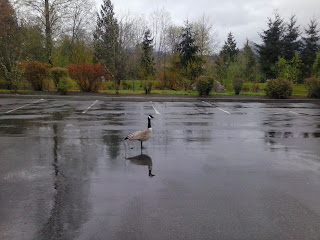
https://blogger.googleusercontent.com/img/b/R29vZ2xl/AVvXsEifD-6HasCAqhqtbKiMttsKvt0xTTLhRb6iUT_ALP60vpWLxtC-WLk67TwNyEUgfzWwuFgYwy3Bi4d1-yHBkFAT4pezrapeXfX0ryrzVB_BBRpvAJWxag2vkKQVl080JVEJgYfNoiwi0aA_/s1600/IMG_20130407_102041.jpg
Somewhere in America (Source)

Aesthetics:
Copenhagen, Denmark
vs.


Everywhere in America

 Hybrid:
Germany

Wednesday, November 19, 2014

When the Snow Starts Falling...

How to get your car out of the snow

How to get your bike out of the snow: if it really had come to it, I suggest just pulling it out using your very own manpower...

http://ericjprice.files.wordpress.com/2011/03/carsnow.jpg 

http://www.nycbikemaps.com/wp-content/uploads/2007/01/Snow-Covered-Bicycle-DSC_0168.jpg 
Bicycles go hand and hand with resilience...