Wednesday, August 24, 2016

Friday, July 29, 2016

Monday, June 27, 2016
An Urban Design Masterpiece: The NY High Line
 |
| South end of the High Line |
 |
| Space to wander or to sit and wonder |
 |
| Old rail lines were preserved! |
 |
| Taking a break |
 |
| Awesome landscape architecture |
 |
| New opportunities created for public art... |
 |
| ...Along with new development by Zaha Hadid! |
 |
| AND retail space |
 |
| A great separation from cars |
 |
| What a fun experience! |
Sunday, February 28, 2016
Less Road, More Space
I've driven past this park on Guerrero countless times, and I finally got the chance to stop and experience it on a beautiful day (along with a Mitchell's treat :) This mini-park is somewhat like a dream! Once "inside" I learned that this plaza is part of a bigger project, Pavement to Parks, made possible by a collaboration between the mayor's office, the SF Planning Department, SFMTA, and Public Works. This is the kind of stuff I hope to be able to design in the future.
 |
| BEFORE |
 |
| Today: Looking north |
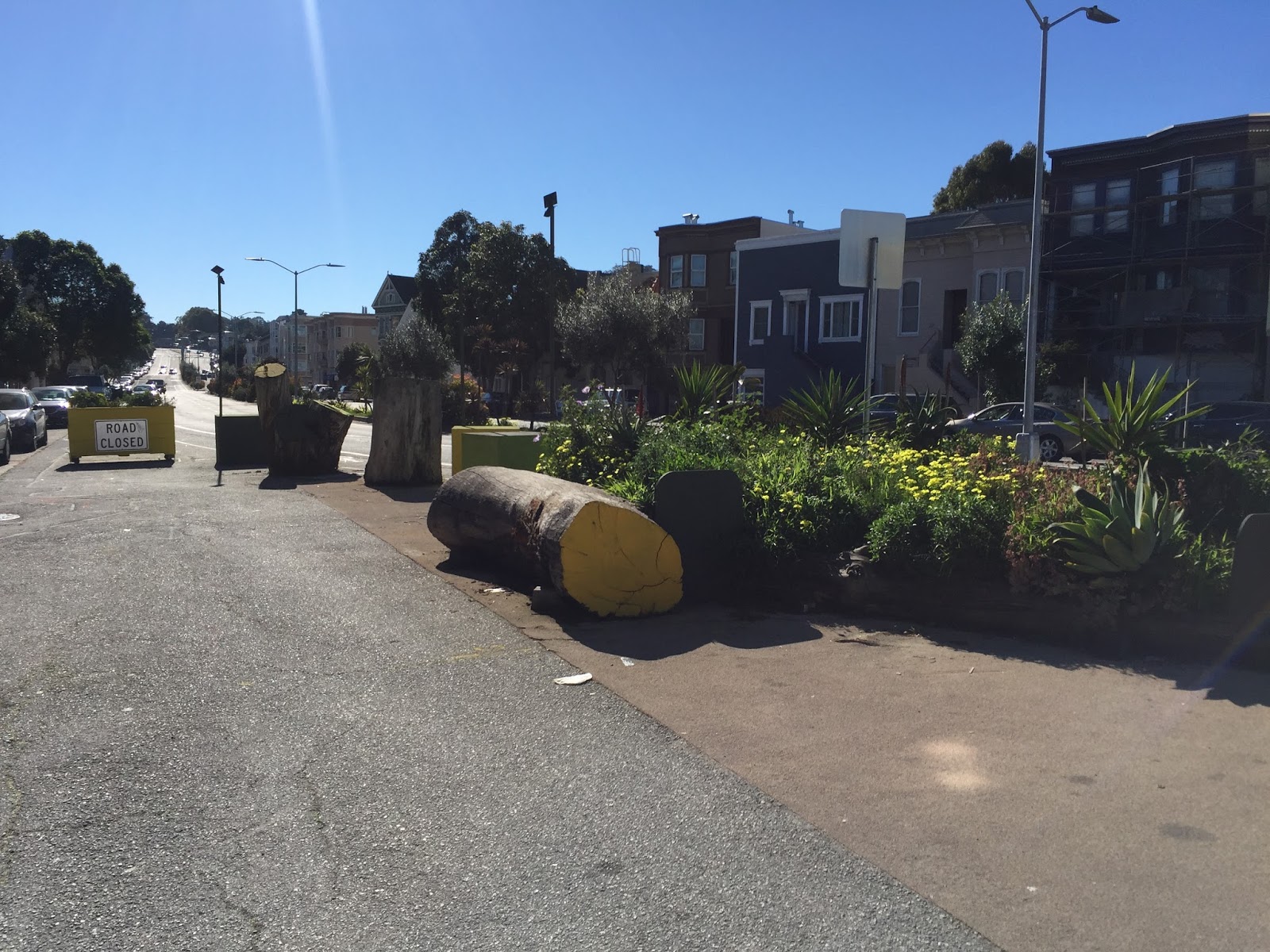 |
| Looking south |
 |
| Sunny space to lay |
 |
| Or sit |
 |
| San Jose & 28th |
 |
| Public Art |
 |
| Left side looking north up Guerrero; right side looking south |
Sunday, January 31, 2016
Design for Walkability
I stumbled
across a SPUR Report from 2013 on how to strengthen San Jose's future
through urban design. For my own notes, I would like to go over the
first part of the report that introduces the importance of design in cities.
What is Urban Design?

Design for Walkability: Seven Key Components
This information is adapted from the 12/2013 SPUR Report, "Getting to Great Places: How better urban design can strengthen San Jose's future."
What is Urban Design?
- "the physical organization of buildings, streets and open spaces into whole places that work for people."
- The placement, orientation and form of buildings
- Site planning, or the physical arrangement of buildings and uses within development projects
- Multiple scales, from the human body to the neighborhood or district
- Circulation and access for all travel modes
- Human experience, activity, social interaction and travel behavior
- The arrangement and design of streets and open spaces
- The connection of buildings to the public realm and to one another
- Above all: the integration of these things
- Sustainability
- Mobility and Access
- Prosperity and Economic Growth
- Public Life
- Public Health
- Social Equity

Design for Walkability: Seven Key Components
- Create fine-grained pedestrian circulation
- frequent and densely interconnected pedestrian routes that shorten both actual and perceived distances
- smaller city blocks are good examples
- Orient buildings to streets and open space
- buildings should be placed right at the edges of streets and public spaces, not set back
- Organize uses to support public activity
- active use of space, for example retail, should be along pedestrian routes, and private spaces should be tucked away
- residential entrances should provide a graceful transition from public to private
- Place parking behind or below buildings
- parking is an expensive, space-hungry, and unattractive use and should be located to support and enliven public spaces
- Address the human scale with buildings and landscape details
- people experience the built environment at the scale of their own bodies in space, and buildings should meet and engage people at that scale
- Provide clear, continuous pedestrian access
- sidewalks are the city's connective tissue and should include elements like trees, lighting, street furniture and public art
- Build Complete Streets (from the National Complete Streets Coalition, Smart Growth America)
- "A Complete Street provides safe, comfortable, attractive, and convenient access and travel for pedestrians, bicyclists, motorists, and transit users of all ages, abilities, and preferences. The design of a Complete Street considers both the public right-of-way and the land uses and design of the adjoining properties, including appropriate building heights and the planning of adjoining land uses that actively engage the public street realm."
This information is adapted from the 12/2013 SPUR Report, "Getting to Great Places: How better urban design can strengthen San Jose's future."
Subscribe to:
Posts (Atom)